
Nevada asks for two things at once and most owners only remember one of them. The annual list names the managers of an LLC or the officers and directors of a corporation. The state business license is a separate authorization to conduct business in Nevada that renews on the same cycle.
They are submitted together, and they are due by the last day of the anniversary month. An entity that files the list while overlooking the license has not finished the job. Nevada also wants an initial list at formation, rather than waiting for the first anniversary. That catches out newly formed companies in their first ninety days.
What Nevada Asks For Each Year
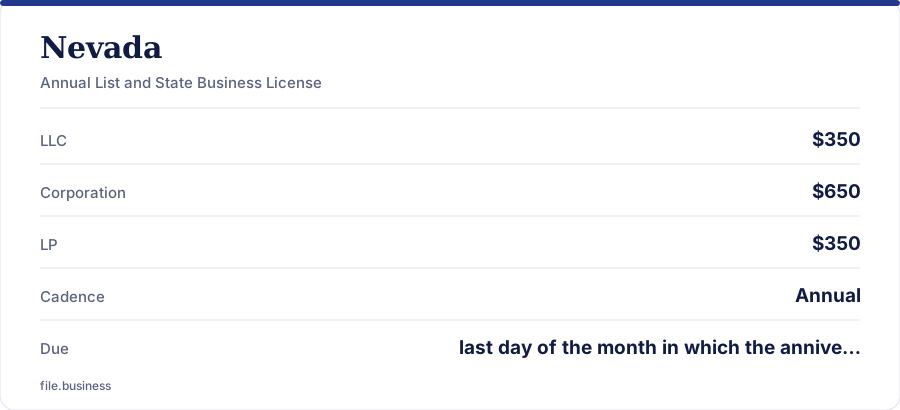

The annual list is a statement of who runs the entity. NRS 86.263 imposes that filing requirement on every Nevada limited liability company, and NRS 78.150 does the same for corporations. For a limited liability company that means the managers or managing members. For a corporation it means the officers and directors, with the president, secretary, and treasurer identified. Nevada publishes that list. That makes the filing the principal public source of truth about who has authority to act for a Nevada company. The state business license renewal accompanies it, and is what permits the entity to conduct business in the state at all.
The fee is the part to check rather than to assume. Nevada prices the combination by entity type and by the license category that applies. The total for a corporation is not the total for a limited liability company. The amount is a function of the entity and the license, rather than a single flat figure. So confirm the current charge in the state portal at the moment you file, rather than budgeting from a number someone quoted a year ago.
The initial list at formation
Nevada is one of the few states that requires a list before the first anniversary arrives. A newly formed entity files an initial list along with its state business license shortly after formation. The annual cycle begins from there. Founders who form the company and then wait for a renewal notice a year later have already missed a filing. That is a common, and entirely avoidable, way to begin a Nevada entity in a delinquent position.
Who files in Nevada
Domestic LLCs and corporations file the annual list and license renewal every year. Entities formed elsewhere that hold a Nevada foreign qualification file on the anniversary of the Nevada registration, on the same terms. Certain entity types and license categories have their own variations, and the license element in particular is worth confirming for a business whose activity might fall into a specific category.
The Nevada Filing at a Glance
| Item | Value |
|---|---|
| Report name | Annual List and State Business License renewal |
| Filing frequency | Annual, plus an initial list at formation |
| Deadline | Last day of the anniversary month |
| Filing fee | Set by entity type and license category; confirm in the state portal |
| Late penalty | $75 + interest |
| Revocation | Around 18 months of non-compliance |
| Processing time | 5-10 business days |
| Filing agency | Nevada Secretary of State |
| Filing portal | esos.nv.gov |
The state portal handles the list, the license, and certificate ordering in one place. It will even process a certificate request with apostille service in a single transaction, which is genuinely useful for a Nevada entity that banks internationally. Standard processing runs five to ten business days.
What the anniversary month end rule means
The deadline is not the anniversary date. It is the last day of the month in which the anniversary falls. An entity formed on September 3 is due by September 30, and one formed on September 27 is due by the same September 30. That gives a longer runway than an anniversary date rule would. It also means a company that mentally files on its anniversary date is filing early rather than late, which is the safer error to make.
What has to match the record
Nevada validates the entity name, the business identification number, the registered agent name and Nevada street address, and the management or officer list you submit. An agent who has resigned needs a change of agent filing accepted first. Nevada is strict about the agent record, because it underpins service of process for a large population of entities whose owners live elsewhere. Confirm what the state currently shows on the Nevada business search before you begin.
File your Nevada annual report
We pull your record from the state, prefill every field, and track next year’s deadline. Or keep reading and file it yourself; this guide covers both.
Compliance Risk: Penalties, Revocation, and Starting Over
Nevada moves faster to revocation than most states, and the cost of rebuilding a Nevada entity is the highest in this region, so the two ends of the escalation both point the same way.
The Nevada escalation sequence
- First day after the anniversary month. A $75 penalty attaches, with interest running on the outstanding amount.
- Shortly after. The entity moves to default status. Good standing is gone and certificates stop issuing.
- The license lapses with the list. Both halves of the filing are outstanding, so the authority to conduct business in Nevada is affected as well as the entity record.
- Around 18 months. The charter is revoked, which is faster than the 24 months most states allow.
- After revocation. An Application for Reinstatement is required. Nevada sets no statutory cutoff, so reinstatement stays available, at a cost that keeps growing.
| Years missed | Late penalties | Also outstanding | Entity status |
|---|---|---|---|
| One year | $75 | One annual list and one license renewal, plus interest | Default, no certificates |
| Two years | $150 | Two lists and two license renewals, plus interest | Charter revoked |
| Three years | $225 | Three lists and three license renewals, plus interest | Revoked, reinstatement required |
The penalty column is only the visible part. Each missed year also leaves the underlying list and license amounts unpaid, and Nevada charges interest on the balance. So the running total is always higher than the $75 multiples suggest. Confirm the current list and license figures in the state portal when you calculate what a lapse actually owes. They depend on entity type and license category, and are the numbers most likely to have changed since anyone last looked.
What makes the Nevada calculation different is the alternative. Forming a replacement entity costs $425 for a limited liability company, or $725 for a corporation, the highest formation fees in this group by a wide margin. That is before re-qualifying anywhere else the original entity was registered. Reinstating is almost always the cheaper path, and it stays available because Nevada sets no statutory cutoff. Our reinstatement service handles revoked Nevada charters, and where the entity has served its purpose, closing it deliberately stops the penalties and the license obligation together.
Three Nevada Filings in Practice
Example 1: A Reno retailer files both halves
An online retailer operating as a single-member LLC was formed in May, so its filing is due by May 31 each year. The owner files in the first week of the month. She submits the annual list naming herself as the sole manager, renews the state business license in the same session, and confirms the amount in the portal rather than assuming last year's figure still applies. Acceptance posts within a week, and the entity carries no default status into the year.
Outcome: The two part filing was treated as one task, which is the only reliable way to finish it.
Example 2: A Las Vegas corporation and its officer list
A hospitality group appointed a new president and secretary after a management buyout in February. In Nevada the annual list is the officer record, so the filing due at the end of the company's anniversary month is where the change becomes public and where signing authority is evidenced. The company files the revised list with the license renewal. A month later, its property lender verifies signatory authority against the Nevada record before advancing on a refurbishment facility. The names match the resolutions exactly.
Outcome: In Nevada the annual list is the officer roster, so filing it accurately is the governance update.
Example 3: A Henderson holding company in three states
A holding company formed in Nevada holds operating assets in California and Arizona and is qualified in both. Nevada runs on the anniversary month end with a license attached. California runs a statement of information on its own biennial or annual rule, depending on entity type. Arizona has its own cycle. The company treats Nevada as the anchor filing, because a revoked Nevada charter would undermine the qualifications that depend on it. It also helps that the Nevada portal can produce a certificate with apostille in one transaction, when an overseas bank asks for one.
Outcome: The home charter stayed clean, so the two qualifications did too. Our deadline table by state covers the other two cycles.
Five Errors That Put Nevada Charters in Default
The first two are specific to Nevada's structure and account for most of the defaults we see.
What happens: The annual list is submitted, the state business license renewal is not, and the entity is still delinquent.
Why it happens: Every other state asks for one filing. Nevada asks for two things in one transaction, and only one of them looks like an annual report.
Consequence: A $75 penalty and default status despite the owner believing the filing was complete.
Prevention: Treat the list and the license as a single task that is not finished until both confirmations arrive.
What happens: A new entity waits for its first anniversary, not realizing Nevada wanted a list shortly after formation.
Why it happens: Most states have nothing due until the first annual cycle, so nothing prompts a new filer to look.
Consequence: An entity that is delinquent within its first months, before it has traded at all.
Prevention: Build the initial list and license into the formation checklist rather than the compliance calendar.
What happens: The amount set aside does not match what the portal asks for, and the filing stalls at payment.
Why it happens: Nevada prices the combination by entity type and license category rather than as one flat fee.
Consequence: A payment failure during the final week of the anniversary month, which becomes a late filing.
Prevention: Open the portal and read the current amount before you plan the filing, every year.
What happens: A delinquent entity is left on the basis that revocation is a distant problem.
Why it happens: The common pattern elsewhere is roughly twenty-four months to administrative dissolution.
Consequence: Nevada revokes at around eighteen months, six months earlier than the assumption allows for.
Prevention: Diary eighteen months from the missed deadline, not twenty-four, and act long before it.
What happens: The filing is blocked because the registered agent has resigned or moved.
Why it happens: Many Nevada entities are owned from outside the state, so the agent is the only Nevada presence and nobody reviews it.
Consequence: A change filing has to clear first, and service of process may have been going somewhere unread.
Prevention: Use a commercial Nevada registered agent whose address is independent of where the owners live.
A Nevada Routine for a Two Part Filing
Nevada rewards a routine that treats the list and the license as inseparable.
How File.Business Files in Nevada
We file the annual list and the state business license renewal together, early in the anniversary month. First we confirm the current amounts in the state portal, and reconcile the management or officer list against the record. We return both confirmations, not just one. And we monitor good standing in between, which in Nevada means watching an eighteen month revocation clock rather than a twenty-four month one.
First year Nevada registered agent service is included. Where a charter has already been revoked we file the reinstatement, and we can order a Nevada certificate of good standing, with apostille where an overseas bank needs one, once the record is clean.
Nevada annual list and business license FAQ
The questions Nevada's two part filing produces most often. Our annual report service covers Nevada alongside every other state you hold.
When is the Nevada annual list due?
By the last day of the entity anniversary month, every year. The deadline is the month end rather than the anniversary date itself, so an entity formed on September 3 and one formed on September 27 are both due by September 30.
What exactly does Nevada require each year?
Two things in one transaction: an annual list naming the managers of an LLC or the officers and directors of a corporation, and a renewal of the state business license. Filing one without the other leaves the entity delinquent.
How much does the Nevada filing cost?
Nevada prices the annual list and the state business license by entity type and license category, rather than as a single flat figure. The totals differ between limited liability companies and corporations. Confirm the current amount in the Secretary of State portal at the time you file, rather than working from an older quotation.
What is the penalty for filing the Nevada annual list late?
$75 plus interest on the outstanding amount, besides the unpaid list and license charges for the year. Two missed years carry $150 in penalties and three carry $225, before the underlying amounts and interest are added.
Does Nevada require a filing when the entity is formed?
Yes. Nevada requires an initial list and state business license shortly after formation rather than waiting for the first anniversary. New entities that expect nothing until year one are frequently delinquent within their first months.
How quickly does Nevada revoke a charter?
At around eighteen months of non-compliance, which is roughly six months faster than the twenty-four month pattern common elsewhere. An Application for Reinstatement restores the entity afterwards, and Nevada sets no statutory cutoff for filing it, though the cost keeps rising.
File your Nevada annual report
We pull your record from the state, prefill every field, and track next year’s deadline. Or keep reading and file it yourself; this guide covers both.
Working in Nevada specifically: Nevada annual list filing and our Nevada annual list reference page carry the current amounts and the exact submission the Secretary of State expects. Registering in from another state starts with foreign qualification in Nevada.
This guide is written from the official sources below. Fees, forms, and deadlines change. Confirm the current requirement with the agency before you file.
Disclosure. File.Business is a private filing service, not a government agency and not a law firm. We prepare and submit filings at your direction. Nothing on this page is legal or tax advice. Filing fees, deadlines, and statutory references are current as of the last-updated date shown above, and they can change. Confirm current requirements with the relevant state agency before you file.


