What Foreign Qualification Actually Is

Foreign qualification is the formal process of registering your LLC or corporation to do business in a US state other than the state where it was originally formed. The word "foreign" in this context means out-of-state, not international. A Delaware LLC operating in California is "foreign" in California even though both states are in the United States. The legal terminology is confusing, but the underlying concept is simple: each state has its own business registration system, and operating in a state generally requires registering with that state.
Foreign qualification is one of the most commonly missed compliance obligations for multi-state operations. Many founders assume that forming an LLC in Delaware or Wyoming and operating from another state is sufficient, it usually is not. Once business activity crosses state lines, foreign qualification becomes legally required in the operating state. Operating without foreign qualifying when required creates a slow-burning compliance problem that can accumulate into substantial penalties before being detected.
Why states require foreign qualification
States require foreign qualification for two main reasons. First: revenue. Foreign qualification triggers state filing fees, annual report fees, franchise tax obligations, and potentially state income tax, meaningful revenue for the state. Second: jurisdiction. By foreign-qualifying, the entity formally consents to the state's legal jurisdiction, which means the entity can be sued in that state's courts and is bound by the state's laws while operating there. Both reasons reflect legitimate state interests in regulating businesses that benefit from operating in the state.
What foreign qualification doesn't do
Foreign qualification does NOT change your entity's home state, change your federal tax classification, create a new EIN, or merge the foreign-qualified operations with your home-state operations. It is purely an operating-permission grant from the foreign state. Your Delaware LLC foreign-qualified in California is still a Delaware LLC, it just has authorization to also operate in California. The home state remains the legal jurisdiction governing the entity's internal affairs (governance, ownership transfers, dissolution).
When Foreign Qualification Is Required
Foreign Qualification Fees by State (Sample of 10)
| State | Filing fee (foreign LLC) | Annual report fee | Avg processing |
|---|---|---|---|
| Delaware | $200 | $300 LLC tax | 3-5 business days |
| Florida | $125 | $138.75 | 2-5 business days |
| California | $70 | $800 min tax | 5-10 business days |
| Texas | $750 | Varies (no-tax-due) | 3-7 business days |
| New York | $250 | $9 (biennial) | 5-10 business days |
| Massachusetts | $750 | $520 | 5-10 business days |
| Nevada | $425 | $200 + $150 list | 5-15 business days |
| Wyoming | $100 | $60 | 3-7 business days |
| Iowa | $50 | $30 biennial | 10-15 business days |
| Mississippi | $50 | $25 | 5-10 business days |
Every state has its own "transacting business" or "doing business" test that defines when foreign qualification is required. The tests differ in detail but share common elements across the 51 US jurisdictions.
Activities that ALWAYS trigger foreign qualification
Four activities trigger foreign qualification in essentially every state: (1) Maintaining a physical office or retail location in the state. (2) Hiring W-2 employees who work in the state. (3) Owning real property (real estate) in the state. (4) Holding a state-issued business license, professional license, or sales tax permit in the state. Any of these four activities establishes clear, sustained presence in the state and meets virtually every state's "transacting business" definition.
Activities that USUALLY trigger foreign qualification
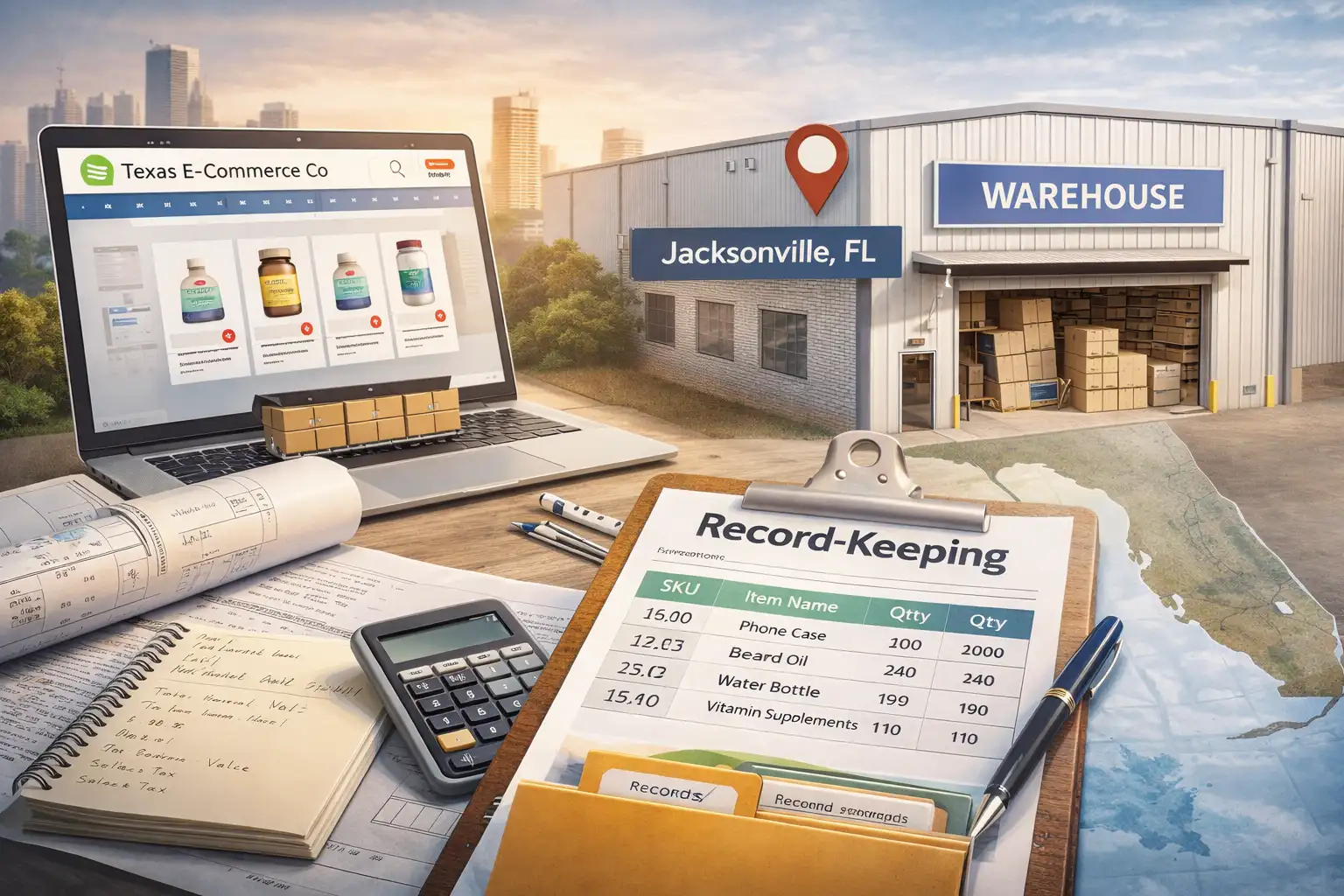
Other activities that commonly trigger the requirement: (1) Hiring independent contractors who perform substantial work in the state. (2) Maintaining inventory or fulfillment centers in the state. (3) Operating a website with state-specific physical fulfillment or services. (4) Regular sales activity (more than occasional/incidental) within the state. (5) Long-term contracts performed primarily within the state. The threshold for "substantial" varies by state, California is among the strictest, while most other states focus on physical presence.
Activities that USUALLY do NOT trigger foreign qualification
Common activities that typically don't require foreign qualification: (1) Sending a single shipment of goods into the state. (2) Holding a single meeting or attending a conference in the state. (3) Online sales to state residents from a fulfillment location in another state (though state sales tax registration may still be required). (4) Maintaining a bank account in the state without other operations. (5) Owning an interest in another business that operates in the state. These limited activities generally don't establish enough presence to require qualification, but the safe harbor varies by state.
Qualify in another state
If you would rather not do this yourself, we obtain the home-state certificate, appoint the agent, and file the application. Or keep reading and file it on your own. This guide covers everything you need either way.
The Foreign Qualification Filing Process
Foreign qualification follows a consistent pattern across all 51 US jurisdictions, with state-specific variations in fees, forms, and processing speed.
Step 1: Obtain a Certificate of Good Standing from your home state
Almost every state requires a Certificate of Good Standing (sometimes called Certificate of Existence or Certificate of Status) from your home state, typically dated within 30-90 days of the foreign qualification filing. The Certificate confirms that your entity exists, is in good standing, and has met all home-state obligations. Obtain this first through your home state's online filing system. Processing typically takes 1-5 business days; expedited is available in most states.
Step 2: Designate a registered agent in the new state
You must have a registered agent at a physical address within the new state. Your home-state agent cannot serve. Two options: (a) commercial registered agent service in the new state ($100-$300/year), or (b) a person or business with a physical address in that state who consents to serve. For multi-state operations, using a single national provider that covers all 50 states from one dashboard simplifies management.
Step 3: File the Application for Certificate of Authority
Each state has its own foreign qualification application form (terminology varies: Certificate of Authority, Application for Authority, Certificate of Registration, Application for Registration). The application typically requires: your entity's legal name and home state, the entity's home state formation date, your principal address, the new state's registered agent name and address, the name(s) of officers or members in some states, and a brief description of the business activities. Submit through the state's online portal with payment of the filing fee.
Step 4: Complete state-specific compliance setup
Once qualified, additional state compliance obligations begin: annual report or biennial statement filing (timing varies by state), state-level franchise tax registration (especially in CA, DE, TX, etc.), state sales tax permit if selling goods, state employment tax registration if hiring, and potentially professional licensing if operating in regulated industries. Don't treat qualification as completion, it's the start of an ongoing compliance relationship with the new state.
Penalties for Operating Without Foreign Qualifying
States enforce foreign qualification requirements with a layered penalty structure that escalates the longer the violation continues.
Penalty 1: Loss of access to state courts
The most universal penalty: an unqualified foreign entity cannot maintain a lawsuit in that state's courts. You can be sued, but you cannot enforce contracts, recover damages, or pursue debts through the legal system. This is a serious operational disability, your business effectively cannot defend itself or assert its rights in that state until it foreign-qualifies and pays back fees.
Penalty 2: Civil fines and back fees
States impose civil fines ranging from $200 (Wyoming) to $10,000+ (California, repeat offenders) for unauthorized business activity. Additionally, the state typically requires payment of all back filing fees and franchise tax for the period of unauthorized activity, plus interest. A two-year violation can easily cost $5,000-$15,000 in California or Texas to come into compliance retroactively.
Penalty 3: Loss of contracts and licensing issues
Counterparties may refuse to honor contracts with unqualified foreign entities, particularly for government contracts, professional services contracts, or any contract requiring evidence of legal authority to operate. Licensing boards may reject license applications or renewals. Banks may freeze accounts or refuse to open new ones. The reputational and operational cascade extends well beyond the direct state penalties.
Penalty 4: Personal liability exposure
In some states, officers, members, or owners can be held personally liable for the entity's unauthorized activities. This pierces the limited-liability shield that the LLC or corporation was supposed to provide. The personal liability exposure depends on state law and circumstances, but it represents a serious risk that defeats the original purpose of forming the entity.
Foreign Qualification vs Forming a New LLC
A common alternative to foreign qualification is forming a separate LLC in the new state. The choice between these two paths affects taxes, liability, and operational complexity.
When foreign qualification makes sense
Foreign qualification is the right choice when: (1) operations in the new state are extensions of your existing business under the same brand and contracts, (2) you want to maintain a single legal entity for simplicity, (3) the operations don't need to be liability-separated from your existing business, (4) you want to consolidate accounting, tax filing, and management. Most growing businesses expanding into new states should foreign-qualify rather than create new entities.
When forming a new LLC makes more sense
A new LLC in the second state makes sense when: (1) you want to legally segregate liability between the operations (a high-risk new venture should not put existing operations at risk), (2) tax planning specifically favors separate entities (state tax differences, ownership structures), (3) the new operation is genuinely a different business under different management, (4) regulatory requirements differ enough that combining them creates compliance complexity. Real estate investors, for example, often form a separate LLC per property to limit cross-property liability.
How File.Business Handles Foreign Qualification
File.Business manages foreign qualification in all 51 US jurisdictions as an end-to-end service. For each foreign qualification, we: (1) confirm the activities triggering qualification in the new state, (2) obtain the Certificate of Good Standing from your home state, (3) designate File.Business as registered agent in the new state (first year free), (4) prepare and file the Certificate of Authority application, (5) handle state-specific add-ons like Statement of Information or initial reports, (6) provide ongoing annual report filing in the foreign state as part of compliance monitoring, (7) coordinate parallel filings if you're qualifying in multiple states simultaneously. The service includes a "transacting business" assessment to confirm qualification is genuinely required before incurring the costs.
What the Penalty Actually Costs, by State
Most guides stop at the sentence about losing access to the courts. That is real, and also the cheapest consequence. The money is in the arithmetic each state applies to the period you traded unregistered.
| State | Formula | Four years unregistered |
|---|---|---|
| North Carolina | $10 a day, capped at $1,000 a year, plus all back fees and taxes | $4,000 plus arrears |
| Texas | Registration fee multiplied by each calendar year unregistered | $3,000 plus the $750 registration |
| California | $2,000 per taxable year on failure to file on demand | $8,000 plus the $800 annual tax |
| Nevada | A fine set by the court, on wilful failure | $1,000 to $10,000 |
| Virginia | A personal penalty on each individual who knowingly did the business | $500 to $5,000 each |
The statutes behind those rows are short and worth reading. North Carolina General Statutes section 55-15-02 sets the daily civil penalty and the annual cap. Texas Business Organizations Code section 9.054 multiplies the registration fee by the number of calendar years, counting a partial year as a full one, and section 9.051 bars the entity from maintaining a suit in the meantime. Nevada Revised Statutes section 80.055 sets a fine of not less than $1,000 and not more than $10,000 and closes the courts until compliance. Virginia Code section 13.1-1057 reaches past the entity to the members, managers and employees personally. Our California foreign qualification guide covers the largest single-year figure of the five.
The registration fee is the smaller number
Registration runs from $10 in South Carolina to $750 in Texas and South Dakota, at a median near $115. Against a North Carolina penalty of $4,000, or a California exposure of $8,000, the fee stops being the decision. Ten states want no home-state document at all, and Virginia wants a certified copy of the articles rather than a certificate, which our certificate of good standing guide maps in full.
Five Mistakes That Create the Exposure
Mistake 1: Treating a remote hire as no footprint
What happens. A company hires one employee in a new state and files nothing. Why it fails. Payroll in a state is the clearest single trigger there is, and it opens a withholding obligation whether or not the entity registers. Prevention. Treat the first hire in a state as the registration date.
Mistake 2: Registering without opening the tax account
What happens. The certificate of authority is granted and nothing else is done. Why it fails. In most states the business registry and the revenue department are separate agencies with separate accounts. Consequence. A clean registration sitting on top of an unfiled tax return. Prevention. Open both in the same week, and diary the report cycle against our franchise tax by state comparison.
Mistake 3: Keeping only the home-state agent
What happens. The new registration names the existing out-of-state agent. Why it fails. Every state requires an address within its own borders, and six of them call the appointee something else entirely. Prevention. Appoint locally, using the term the state uses, as our state agent requirements page and registered agent service guide set out.
Mistake 4: Sending the wrong home-state document
What happens. A certificate of good standing is attached to every application in the batch. Why it fails. Recency windows run from 30 days to no limit, and Virginia wants authenticated articles instead. Prevention. Check the receiving state before ordering anything.
Mistake 5: Waiting until a dispute forces the question
What happens. Registration is deferred until a customer refuses to pay. Why it fails. The bar on suing is the one consequence that bites exactly when you need the courts. Consequence. Cure first, litigate second, at whatever the back fees and penalties have grown to. Prevention. Register while it is a $115 decision.
Three Qualifications from the Filing Desk
Example 1: A North Carolina caseload at $10 a day
Verity Home Care LLC, formed in South Carolina, took on clients across the border and put two carers on the road in North Carolina for three years without registering. When a payer audit surfaced it, the penalty under section 55-15-02 came to $10 a day capped at $1,000 a year, so $3,000, plus every year of fees and taxes. The $250 registration would have avoided all of it. See our North Carolina foreign qualification guide.
Example 2: A Nevada contract with no court to enforce it
Torrance Modular Homes Inc. installed units in Nevada for two seasons on an Arizona registration. When a developer withheld $146,000, the company filed suit and learned that section 80.055 bars an unqualified foreign corporation from maintaining an action in a Nevada court until it complies, and exposes it to a fine of $1,000 to $10,000. Qualifying mid-dispute cost the filing, the fine and four months. Our Nevada foreign qualification guide covers the route.
Example 3: A Texas late fee that multiplies
Kestrel Field Services LLC ran crews out of a leased yard near Odessa from 2021 and registered in 2025. Texas charges $750 to register and, under section 9.054, a late filing fee of the registration fee multiplied by every calendar year transacted unregistered, counting partial years in full. Four calendar years produced $3,000 on top of the $750. See our Texas foreign qualification guide and Texas registered agent guide. When a registration is no longer needed, withdrawing it deliberately beats leaving it to lapse, which our dissolution guide covers, and a later rename must follow the entity into every state through articles of amendment.
Frequently asked questions
What is foreign qualification?
Foreign qualification is the formal process of registering your LLC or corporation to do business in a state other than where it was originally formed. "Foreign" in this context means out-of-state, not international. A Delaware LLC operating in California is foreign-qualified in California; it remains a Delaware LLC at its core.
When am I required to foreign qualify?
When your business is "transacting business" in another state. Each state defines this differently, but common triggers include: having a physical location, having employees who work in the state, owning property in the state, holding a state business license, or conducting substantial sales activity within the state. Occasional or one-time transactions typically do not trigger the requirement.
What documents do I need to foreign qualify?
Three core documents: (1) An Application for Certificate of Authority (or equivalent) filed with the new state's Secretary of State. (2) A Certificate of Good Standing or Certificate of Existence from your home state, typically dated within 30-90 days of filing. (3) A registered agent designation for the new state. Some states require additional documents (Statement of Information, tax registration).
What happens if I don't foreign qualify when I should?
Penalties include: (1) Civil fines ranging from $200 to $10,000+ depending on state. (2) Loss of the ability to sue in that state's courts (you can be sued but cannot enforce contracts). (3) Back taxes and franchise tax assessments for the period of unauthorized business. (4) Personal liability exposure for the owners in some cases. The penalties typically compound the longer the violation continues.
Should I foreign qualify or form a new LLC in the second state?
Foreign qualify when: you want to maintain a single legal entity, your operations are extensions of your existing business, you want to preserve your existing brand and contracts. Form a new LLC when: you want to legally segregate liability between operations, you operate genuinely different businesses, or tax planning favors separate entities. Foreign qualification preserves operational unity; separate LLCs preserve liability separation.
Does foreign qualification require a registered agent in the new state?
Yes. Every state requires a registered agent within that state, the home state's agent cannot serve. Multi-state operations need a registered agent in every state where they're qualified. A single national RA provider (covering all 50 states from one provider) simplifies this substantially compared to using separate agents per state.
Can I withdraw foreign qualification later if I stop operating in that state?
Yes. Each state has a Certificate of Withdrawal (or equivalent) that formally ends your foreign qualification. The withdrawal must be filed; simply ceasing operations does not end your obligations. Until withdrawal is filed, annual reports and franchise tax obligations continue to accrue in that state. File withdrawal promptly when operations end to stop the accruing obligations.
Let File.Business handle the filing.
We pull your record from the state, prefill every field, and validate before submission. Same-day filing in most states. First year of registered agent included with new entity formations.
This guide is written from the official sources below. Fees, forms, and deadlines change; confirm the current requirement with the agency before you file.
Disclosure. File.Business is a private filing service, not a government agency and not a law firm. We prepare and submit filings at your direction, and nothing on this page is legal or tax advice. Filing fees, deadlines, and statutory references are current as of the last-updated date shown above and can change. Confirm current requirements with the relevant state agency before you file.